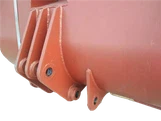
Can a 2 - Cubic Meter Boom be used in cold climates?
As a supplier of 2 - cubic meter booms, I often get asked about the suitability of our products in cold climates. It's a valid concern, as extreme cold can have a significant impact on the performance and durability of heavy - machinery components. In this blog, I'll explore the factors at play and explain how our 2 - cubic meter booms can be effectively used in cold - weather conditions.
Understanding the Challenges of Cold Climates
Cold climates present several challenges for heavy machinery. One of the most significant issues is the effect of low temperatures on the materials. Metals become more brittle in the cold, which can increase the risk of cracking and failure. For instance, the steel used in the construction of our 2 - cubic meter booms may experience reduced ductility, making it more prone to sudden fractures under stress.


Another challenge is the impact on hydraulic systems. Hydraulic fluids can thicken in cold temperatures, which can lead to reduced flow rates and slower operation of the boom. This not only affects the efficiency of the equipment but also puts additional strain on the hydraulic pumps and valves, potentially leading to premature wear and tear.
Cold weather can also cause problems with lubrication. Lubricants may lose their viscosity in the cold, reducing their ability to protect moving parts from friction and wear. This can result in increased maintenance requirements and a shorter lifespan for the boom's components.
Design Features for Cold - Climate Use
To address these challenges, our 2 - cubic meter booms are designed with several features that make them suitable for cold - climate use.
First, we use high - quality, cold - resistant steel in the construction of the boom. This steel is specifically engineered to maintain its strength and ductility at low temperatures, reducing the risk of cracking and failure. Our manufacturing process also includes heat treatment and stress - relieving steps to further enhance the durability of the steel.
In terms of the hydraulic system, we use special cold - weather hydraulic fluids. These fluids are formulated to maintain their viscosity and flow characteristics at low temperatures, ensuring smooth and efficient operation of the boom. We also install heaters in the hydraulic reservoirs to prevent the fluid from thickening in extremely cold conditions.
For lubrication, we recommend using synthetic lubricants that are designed for cold - climate use. These lubricants have a lower pour point and better cold - flow properties, ensuring that they can effectively lubricate the boom's moving parts even in sub - zero temperatures.
Maintenance and Operation in Cold Climates
Proper maintenance and operation are crucial for ensuring the long - term performance of our 2 - cubic meter booms in cold climates.
Before starting the boom in cold weather, it's important to warm up the hydraulic system. This can be done by running the engine at a low idle for a few minutes and then slowly operating the boom through its full range of motion. This helps to circulate the hydraulic fluid and bring it up to operating temperature.
Regular maintenance is also essential. This includes checking the hydraulic fluid levels and condition, inspecting the lubrication of moving parts, and tightening any loose bolts or connections. We recommend following a strict maintenance schedule and using only genuine replacement parts to ensure the continued reliability of the boom.
It's also important to store the boom in a heated or insulated area when not in use. This helps to prevent the equipment from being exposed to extreme cold for extended periods, which can cause damage to the components.
Comparing with Other Boom Types
When considering equipment for cold - climate use, it's natural to compare our 2 - cubic meter boom with other types of booms. For example, the 3 - cubic Meter Boom offers a larger capacity but may require more power to operate, which can be a challenge in cold weather due to the reduced efficiency of the engine and hydraulic system.
The Fixed Crusher Boom is designed for specific crushing applications. While it may have its own advantages in terms of stability and durability, it may not be as versatile as our 2 - cubic meter boom, which can be used for a variety of tasks.
The 2 - cubic Meter Rear Operator's Cabin Swing Arm provides a different configuration, but our 2 - cubic meter boom is designed to offer a balance of capacity, maneuverability, and cold - climate performance.
Real - World Experience
We have received positive feedback from customers who have used our 2 - cubic meter booms in cold - climate regions. For example, in northern Canada, where temperatures can drop well below freezing, our booms have been used in mining operations with great success. The cold - resistant design and the use of special hydraulic fluids and lubricants have allowed the booms to operate reliably in harsh conditions, with minimal downtime for maintenance.
In Scandinavia, our booms have been used in forestry applications. The ability to operate smoothly in cold weather has enabled the operators to work efficiently, even during the long winter months. These real - world examples demonstrate that our 2 - cubic meter booms are well - suited for use in cold climates.
Conclusion
In conclusion, our 2 - cubic meter booms can be effectively used in cold climates. Through careful design, the use of appropriate materials and fluids, and proper maintenance and operation, we have addressed the challenges posed by low temperatures. Whether you're working in mining, forestry, or other industries, our booms offer a reliable and efficient solution for cold - climate applications.
If you're interested in learning more about our 2 - cubic meter booms or discussing your specific requirements for cold - climate use, we invite you to reach out to us for a procurement discussion. We have a team of experts who can provide you with detailed information and help you make the right choice for your needs.
References
- "Materials Science and Engineering: An Introduction" by William D. Callister, Jr. and David G. Rethwisch. This book provides in - depth knowledge about the properties of materials at different temperatures, which is relevant to the design of our cold - resistant booms.
- "Hydraulic Systems and Fluid Power: Theory and Applications" by George E. Totten. This reference offers insights into the behavior of hydraulic fluids in cold weather and the design of hydraulic systems for low - temperature operation.
- Industry reports on heavy - machinery use in cold - climate regions, which provide real - world data on the performance and challenges of equipment in such conditions.