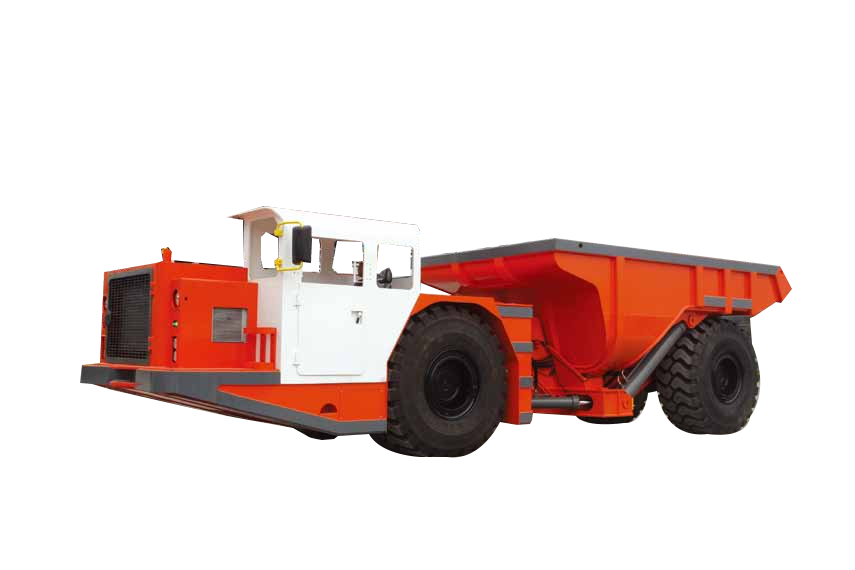
As a supplier of 12 - Ton Mine Trucks, I've witnessed firsthand how the handling of these robust vehicles undergoes significant changes in wet conditions. In this blog, I'll delve into the various aspects of how wet weather affects the performance and handling of our 12 - Ton Mine Trucks, and what operators can do to adapt.
Traction and Braking
One of the most noticeable changes in wet conditions is the reduction in traction. The tires of a 12 - Ton Mine Truck rely on friction with the ground to move forward, turn, and stop. When the surface is wet, a thin layer of water forms between the tires and the road or mine floor, acting as a lubricant. This reduces the coefficient of friction, making it harder for the tires to grip the surface.
For example, on a dry gravel road, the tires can dig in and provide a solid grip. But in the rain, the gravel becomes slippery, and the water can cause the tires to hydroplane. Hydroplaning occurs when the tires lose contact with the road surface and ride on top of the water. This can be extremely dangerous, as it significantly reduces the driver's ability to control the vehicle.
Braking is also severely affected. The stopping distance of a 12 - Ton Mine Truck increases substantially in wet conditions. On a dry surface, the brakes can quickly slow down the vehicle by applying friction to the wheels. However, in the wet, the reduced traction means that the wheels are more likely to lock up, causing the truck to skid. Even if the wheels don't lock up, the brakes have to work harder to overcome the lack of friction, resulting in a longer stopping distance.
To counter these issues, operators should adjust their driving style. They should increase their following distance to allow for the longer stopping distance. Additionally, gentle braking and acceleration are crucial. Sudden inputs can cause the wheels to lose traction and lead to skidding. Some of our 12 - Ton Mine Trucks are equipped with advanced anti - lock braking systems (ABS) that help prevent wheel lock - up and improve braking performance in wet conditions.
Steering and Maneuverability
Steering becomes more challenging in wet conditions. The reduced traction makes it harder for the tires to respond to steering inputs. When the driver turns the steering wheel, the tires may not be able to grip the surface effectively, resulting in a delayed or less precise turn. This can be particularly problematic when navigating tight corners or making sudden maneuvers.
In a mine environment, where space is often limited, this can pose a significant risk. For instance, when backing up into a loading area or making a sharp turn to avoid an obstacle, the lack of steering control can lead to collisions or other accidents.
To improve steering and maneuverability, operators should take turns more slowly. They should also be aware of the vehicle's center of gravity. A 12 - Ton Mine Truck is a large and heavy vehicle, and its center of gravity can affect its stability during turns. In wet conditions, the risk of roll - over increases, especially if the truck is turning too quickly or if the load is unevenly distributed.
Suspension and Ride Quality
The suspension system of a 12 - Ton Mine Truck plays a vital role in providing a smooth ride and maintaining stability. In wet conditions, the suspension has to work harder to absorb the shocks and vibrations caused by the uneven and slippery surface.
The water on the ground can also cause additional problems for the suspension components. It can wash away dirt and debris that normally helps to lubricate and protect the joints and bushings. Over time, this can lead to increased wear and tear on the suspension system.
Moreover, the wet conditions can cause the suspension to become less effective in keeping the tires in contact with the ground. The reduced traction means that the tires are more likely to bounce or lose contact with the surface, which can further affect the handling and stability of the vehicle.
Regular maintenance of the suspension system is essential, especially in wet conditions. Operators should check the suspension components for signs of wear and damage and replace any worn - out parts promptly. Our company offers comprehensive maintenance services and high - quality replacement parts for our 12 - ton Mine Truck to ensure optimal performance.
Visibility
Visibility is another major concern in wet conditions. Rain, fog, and mud can significantly reduce the driver's ability to see the road ahead, other vehicles, and potential hazards. The windshield wipers may struggle to keep up with the heavy rain, leaving streaks and reducing visibility even further.
In a mine, where there are often multiple vehicles and workers operating in close proximity, poor visibility can be extremely dangerous. It can lead to collisions between trucks, or between trucks and pedestrians.
To improve visibility, operators should ensure that the windshield wipers are in good working condition and that the windshield is clean. Some of our 12 - Ton Mine Trucks are equipped with advanced lighting systems that can penetrate through the rain and fog, providing better illumination of the road ahead. Additionally, drivers should use their headlights and fog lights as appropriate to increase their visibility to other road users.
Comparison with Larger Mine Trucks
It's interesting to compare how the handling of a 12 - Ton Mine Truck changes in wet conditions with that of larger trucks, such as 30 - ton Mine Trucks and 50 - ton Mine Trucks. Larger trucks generally have more mass, which means they have more inertia. This makes them even more difficult to stop and maneuver in wet conditions.
The increased weight also puts more stress on the tires, suspension, and braking systems. The tires of larger trucks have to support a greater load, and the reduced traction in wet conditions can cause them to wear out more quickly. The braking systems of larger trucks also have to work harder to slow down the increased mass, resulting in even longer stopping distances.
However, larger trucks may also have more advanced safety features and technologies to help mitigate these issues. For example, they may be equipped with larger and more powerful brakes, as well as more sophisticated traction control systems.
Adapting to Wet Conditions
As a supplier of 12 - Ton Mine Trucks, we understand the challenges that operators face in wet conditions. That's why we offer a range of solutions to help improve the handling and safety of our trucks.
We provide training programs for operators on how to drive our trucks safely in wet conditions. These programs cover topics such as driving techniques, maintenance procedures, and emergency response. We also offer regular maintenance services to ensure that the trucks are in optimal condition.
In addition, we are constantly researching and developing new technologies to improve the performance of our trucks in wet conditions. For example, we are exploring the use of new tire compounds that provide better traction in the wet, as well as advanced sensor systems that can detect changes in road conditions and adjust the vehicle's performance accordingly.

Conclusion
The handling of a 12 - Ton Mine Truck changes significantly in wet conditions. Traction, braking, steering, and visibility are all affected, posing challenges to operators. However, with the right driving techniques, proper maintenance, and advanced safety features, these challenges can be overcome.
If you're in the market for a reliable and high - performance 12 - Ton Mine Truck, look no further. Our trucks are designed to handle the toughest conditions, including wet weather. We invite you to contact us to discuss your specific requirements and learn more about how our trucks can meet your needs. Whether you're a small - scale mining operation or a large - scale enterprise, we have the expertise and the products to support you.
References
- Smith, J. (2018). "Mining Vehicle Safety in Adverse Weather Conditions". Journal of Mining Engineering, 25(3), 123 - 135.
- Johnson, R. (2019). "Tire Traction in Wet Conditions: A Review". Tire Technology International, 42(2), 45 - 52.
- Brown, A. (2020). "Suspension Systems for Heavy - Duty Mining Trucks". Mining Equipment Magazine, 30(4), 67 - 74.