

Hey there! As a supplier of 1 - Cubic Meter Buckets, I often get asked about the load - bearing capacity of these bad boys. So, let's dive right in and break it down.
First off, what exactly is a 1 - Cubic Meter Bucket? Well, it's a piece of equipment designed to scoop up and carry materials. It's used in a variety of industries, like construction, mining, and agriculture. The "1 - Cubic Meter" part refers to the volume of the bucket. It means that the bucket can hold up to 1 cubic meter of material. But that doesn't tell us how much it can actually carry in terms of weight.
The load - bearing capacity of a 1 - Cubic Meter Bucket depends on several factors. One of the most important ones is the material the bucket is made of. Most buckets are made from high - strength steel. This steel is tough and can withstand a lot of pressure. But different grades of steel have different strength properties. A bucket made from a higher - grade steel will generally have a higher load - bearing capacity.
Another factor is the design of the bucket. The shape, the thickness of the walls, and the reinforcement all play a role. For example, a bucket with thicker walls and more reinforcement is going to be able to handle more weight. Some buckets are also designed with special features to increase their load - bearing capacity, like ribbing or bracing.
The type of material you're scooping up also matters. Different materials have different densities. For instance, gravel is much denser than sand. So, if you're using the bucket to carry gravel, it's going to be heavier than if you're carrying sand, even if the volume is the same.
Let's take a look at some common materials and their approximate weights per cubic meter. Water weighs about 1000 kilograms per cubic meter. Sand typically weighs between 1400 - 1600 kilograms per cubic meter. Gravel can weigh anywhere from 1600 - 1900 kilograms per cubic meter. And crushed stone can be even heavier, up to 2000 kilograms per cubic meter.
Now, let's talk about the actual load - bearing capacity of a 1 - Cubic Meter Bucket. On average, a well - made 1 - Cubic Meter Bucket made from high - strength steel can handle a load of around 1500 - 2000 kilograms. But this is just an estimate. If the bucket is made from a lower - grade steel or has a less robust design, the capacity could be lower.
It's also important to note that you shouldn't always fill the bucket to its maximum capacity. Overloading the bucket can cause damage to the bucket itself, as well as to the equipment it's attached to. It can also be dangerous for the operator. So, it's always a good idea to leave some margin for safety.
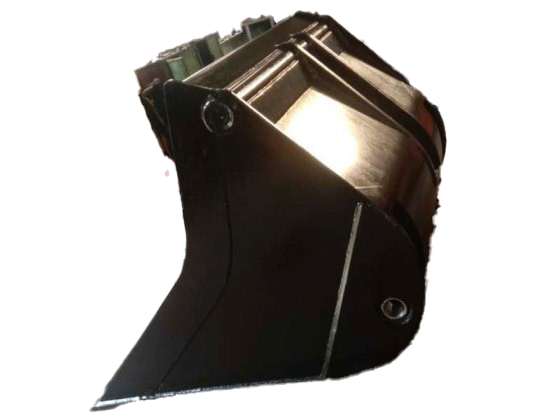

If you're in the market for a bucket with a different capacity, we also offer a 1 - cubic Meter Side Dump Bucket. This type of bucket has a unique design that allows it to dump the material to the side, which can be really useful in certain applications.
We also have a 2.3 - cubic Meter Bucket and a 3.5 - cubic Meter Bucket. These larger buckets are great for jobs that require moving a lot of material at once. But keep in mind that their load - bearing capacity will also be higher, and you need to make sure your equipment can handle the additional weight.
When choosing a bucket, it's important to consider not only the load - bearing capacity but also how it will fit with your existing equipment. You need to make sure the bucket is compatible with your loader or excavator. The mounting system should match, and the size and weight of the bucket shouldn't put too much strain on the machine.
If you have any questions about our 1 - Cubic Meter Buckets or any of our other products, don't hesitate to reach out. We're here to help you find the right bucket for your needs. Whether you're a small - scale contractor or a large - scale mining operation, we've got the solution for you.
So, if you're interested in purchasing one of our buckets or just want to learn more, get in touch. We can have a chat about your specific requirements and see which bucket is the best fit for you. We're confident that our products will meet your expectations and help you get the job done efficiently.
References
- Engineering handbooks on material properties and equipment design
- Industry standards for construction and mining equipment




