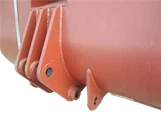
As a dedicated supplier of Mining Truck Hoppers, I understand the critical importance of ensuring the quality and safety of these essential components. Mining truck hoppers are subjected to extreme conditions, including heavy loads, abrasive materials, and constant wear and tear. Therefore, regular inspections are crucial to prevent breakdowns, ensure operational efficiency, and extend the lifespan of the hopper. In this blog post, I will discuss the various inspection methods for a mining truck hopper, providing valuable insights for mine operators and maintenance teams.
Visual Inspection
Visual inspection is the most basic and initial step in assessing the condition of a mining truck hopper. This method involves a thorough examination of the hopper's exterior and interior surfaces to identify any visible signs of damage, wear, or deformation.
Exterior Inspection
- Surface Condition: Check for cracks, dents, and corrosion on the hopper's outer surface. Cracks can compromise the structural integrity of the hopper, while dents may affect its loading and unloading capabilities. Corrosion can weaken the metal and lead to premature failure.
- Welds and Joints: Inspect all welds and joints for signs of cracking, loosening, or corrosion. Welds are critical points in the hopper's structure, and any defects can lead to catastrophic failures.
- Mounting Points: Examine the mounting points where the hopper is attached to the truck chassis. Ensure that the bolts are tight and that there is no excessive movement or play. Loose mounting points can cause the hopper to shift during operation, leading to damage and safety hazards.
Interior Inspection
- Liner Condition: If the hopper is lined, inspect the liner for wear, damage, or delamination. The liner protects the hopper from abrasion and impact, and a worn or damaged liner can significantly reduce the hopper's lifespan.
- Discharge Area: Check the discharge area for blockages, buildup, or damage. Blockages can prevent the proper flow of materials, while buildup can reduce the hopper's capacity. Damage to the discharge area can also affect the efficiency of the unloading process.
- Structural Integrity: Look for any signs of deformation or damage to the hopper's internal structure, such as bent or broken support beams. These issues can compromise the hopper's ability to withstand heavy loads and may lead to collapse.
Ultrasonic Testing
Ultrasonic testing is a non-destructive testing method that uses high-frequency sound waves to detect internal defects in the hopper's metal structure. This method is particularly useful for detecting cracks, voids, and other hidden flaws that may not be visible during a visual inspection.
How Ultrasonic Testing Works
- A transducer is placed on the surface of the hopper, and high-frequency sound waves are sent into the metal.
- The sound waves travel through the metal and are reflected back to the transducer when they encounter a defect or boundary.
- The transducer converts the reflected sound waves into an electrical signal, which is then analyzed to determine the location, size, and type of defect.
Advantages of Ultrasonic Testing
- Non-destructive: Ultrasonic testing does not damage the hopper, allowing for repeated inspections without affecting its integrity.
- High sensitivity: This method can detect small defects that may not be visible to the naked eye, providing early warning signs of potential problems.
- Portable: Ultrasonic testing equipment is relatively portable, making it suitable for on-site inspections.
Magnetic Particle Testing
Magnetic particle testing is another non-destructive testing method that is commonly used to detect surface and near-surface defects in ferromagnetic materials, such as the steel used in mining truck hoppers.


How Magnetic Particle Testing Works
- The hopper is magnetized using a magnetic field.
- Iron particles are applied to the surface of the hopper. These particles are attracted to areas where the magnetic field is disrupted, such as cracks or other defects.
- The excess particles are removed, leaving behind a visible indication of the defect.
Advantages of Magnetic Particle Testing
- Simple and cost-effective: Magnetic particle testing is relatively simple to perform and requires minimal equipment, making it a cost-effective inspection method.
- High sensitivity: This method can detect small surface and near-surface defects, providing valuable information about the hopper's condition.
- Real-time results: The results of magnetic particle testing are visible immediately, allowing for quick decision-making regarding the hopper's safety and usability.
Dye Penetrant Testing
Dye penetrant testing is a non-destructive testing method that is used to detect surface defects in non-porous materials, such as the metal used in mining truck hoppers.
How Dye Penetrant Testing Works
- The surface of the hopper is cleaned and dried to remove any dirt, oil, or other contaminants.
- A liquid penetrant is applied to the surface and allowed to penetrate into any surface defects.
- The excess penetrant is removed, and a developer is applied to the surface. The developer draws the penetrant out of the defects, making them visible.
- The surface is inspected for any indications of defects.
Advantages of Dye Penetrant Testing
- High sensitivity: Dye penetrant testing can detect very small surface defects, providing valuable information about the hopper's condition.
- Versatile: This method can be used on a variety of materials, including metals, plastics, and ceramics.
- Easy to perform: Dye penetrant testing is relatively easy to perform and requires minimal equipment, making it a popular inspection method.
Load Testing
Load testing is a method of evaluating the hopper's performance under real-world conditions by subjecting it to a known load. This method is typically used to verify the hopper's capacity, structural integrity, and operational efficiency.
How Load Testing Works
- The hopper is filled with a known weight of material, such as gravel or sand.
- The hopper is then lifted and transported to a testing area.
- The hopper is unloaded, and the time and effort required to complete the unloading process are recorded.
- The hopper's structural integrity is evaluated by monitoring for any signs of deformation, cracking, or other damage during the loading and unloading process.
Advantages of Load Testing
- Real-world simulation: Load testing provides a realistic assessment of the hopper's performance under actual operating conditions, allowing for accurate evaluation of its capacity and efficiency.
- Safety verification: This method can help to identify any potential safety hazards, such as structural weaknesses or overloading, before they cause a failure.
- Quality control: Load testing can be used as a quality control measure to ensure that the hopper meets the specified design requirements and performance standards.
Conclusion
Regular inspections are essential for maintaining the safety and performance of mining truck hoppers. By using a combination of visual inspection, non-destructive testing methods, and load testing, mine operators and maintenance teams can identify potential problems early and take appropriate measures to prevent breakdowns and ensure operational efficiency.
As a leading supplier of Mining Truck Hoppers, we are committed to providing high-quality products and comprehensive support to our customers. Our hoppers are designed and manufactured to meet the highest standards of quality and durability, and we offer a range of inspection and maintenance services to ensure that your hoppers perform at their best.
If you are in the market for a new mining truck hopper or need assistance with inspection and maintenance, please contact us to discuss your requirements. Our team of experts will be happy to provide you with more information and help you find the right solution for your needs.
References
- ASTM International. (2019). ASTM E164 - 19 Standard Practice for Ultrasonic Contact Examination of Weldments.
- ASTM International. (2018). ASTM E709 - 18 Standard Guide for Magnetic Particle Testing.
- ASTM International. (2018). ASTM E165 - 18 Standard Practice for Liquid Penetrant Testing.
- ISO 12944 - 1:2017 Paints and varnishes -- Corrosion protection of steel structures by protective paint systems -- Part 1: General introduction.