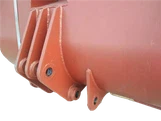
In the realm of heavy - equipment accessories, the size of a bucket can make a world of difference. As a supplier of 4 - Cubic Meter Buckets, I am often asked about the distinctions between a 4 - Cubic Meter Bucket and a 3 - Cubic Meter Bucket. This blog post aims to delve deep into these differences, exploring various aspects such as capacity, performance, application scenarios, and cost - effectiveness.
Capacity
The most obvious difference between a 4 - Cubic Meter Bucket and a 3 - Cubic Meter Bucket lies in their capacity. A 4 - Cubic Meter Bucket can hold approximately 33% more material than a 3 - Cubic Meter Bucket. This additional capacity means that with each scoop, more material can be moved. For large - scale earth - moving projects, such as mining or large construction sites, this extra capacity can significantly reduce the number of cycles required to complete a task. For instance, if you need to move 120 cubic meters of soil, a 3 - Cubic Meter Bucket would require 40 scoops, while a 4 - Cubic Meter Bucket would only need 30 scoops. This reduction in the number of scoops can lead to time savings and increased productivity on the job site.
Performance
When it comes to performance, the 4 - Cubic Meter Bucket has some advantages. Due to its larger size, it can cover a wider area with each pass. This is particularly beneficial in applications where large areas need to be cleared or filled quickly. However, a larger bucket also means more weight. A 4 - Cubic Meter Bucket, when filled, will be heavier than a 3 - Cubic Meter Bucket. This can put more stress on the equipment it is attached to, such as the loader or excavator. The machine needs to have sufficient power and stability to handle the extra weight. If the equipment is not properly matched with the bucket size, it may lead to reduced efficiency, increased wear and tear on the machine, and even safety risks.
On the other hand, a 3 - Cubic Meter Bucket is lighter and more maneuverable. It can be a better choice for tasks that require more precision, such as grading in a confined space or working around obstacles. The lighter weight also means less stress on the equipment, which can result in longer equipment life and lower maintenance costs in the long run.


Application Scenarios
The choice between a 4 - Cubic Meter Bucket and a 3 - Cubic Meter Bucket largely depends on the specific application. In large - scale mining operations, where vast amounts of ore or overburden need to be moved, a 4 - Cubic Meter Bucket is often the preferred choice. The high - volume capacity allows for rapid material handling, which is crucial for meeting production targets.
In construction projects, if the task involves large - scale excavation or filling of foundations for large buildings or infrastructure projects, a 4 - Cubic Meter Bucket can speed up the process. However, for smaller construction sites, such as residential building projects or landscaping jobs, a 3 - Cubic Meter Bucket may be more suitable. It can provide the necessary capacity while being more adaptable to the smaller work areas and more precise work requirements.
In road construction, a 4 - Cubic Meter Bucket can be used for initial earth - moving and filling operations, while a 3 - Cubic Meter Bucket may be used for final grading and finishing touches.
Cost - Effectiveness
The cost - effectiveness of a 4 - Cubic Meter Bucket versus a 3 - Cubic Meter Bucket is a complex consideration. Generally, a 4 - Cubic Meter Bucket will have a higher upfront cost than a 3 - Cubic Meter Bucket. This is due to the larger amount of material used in its construction and the more complex manufacturing processes required to ensure its strength and durability.
However, when looking at the long - term cost, the situation may be different. As mentioned earlier, the 4 - Cubic Meter Bucket can increase productivity by reducing the number of cycles needed to complete a task. This can lead to savings in labor costs and fuel consumption. On the other hand, a 3 - Cubic Meter Bucket may have lower maintenance costs due to its lighter weight and less stress on the equipment.
It is also important to consider the utilization rate of the bucket. If the project has a high demand for moving large volumes of material, a 4 - Cubic Meter Bucket may be more cost - effective in the long run. But if the project only requires occasional use of the bucket or involves more precise work, a 3 - Cubic Meter Bucket may be the better financial choice.
Other Bucket Sizes in Comparison
In addition to the 3 - Cubic Meter and 4 - Cubic Meter Buckets, there are other bucket sizes available in the market. For example, the 0.75 - cubic Meter Bucket is much smaller and is typically used for very precise work, such as small - scale landscaping or indoor construction projects. The 1 - cubic Meter Side Support Frame is designed to provide additional support and is often used in combination with a bucket for more stable operation. The 2.3 - cubic Meter Bucket falls in between the 3 - Cubic Meter and smaller buckets, offering a balance between capacity and maneuverability.
Conclusion
In conclusion, the difference between a 4 - Cubic Meter Bucket and a 3 - Cubic Meter Bucket is significant in terms of capacity, performance, application scenarios, and cost - effectiveness. As a supplier of 4 - Cubic Meter Buckets, I understand that each customer's needs are unique. Whether you are involved in large - scale mining, construction, or other heavy - equipment applications, choosing the right bucket size is crucial for achieving optimal results.
If you are considering purchasing a bucket for your project, I encourage you to carefully evaluate your requirements. Consider factors such as the volume of material to be moved, the working environment, the available equipment, and your budget. If you have any questions or need more information about our 4 - Cubic Meter Buckets, please don't hesitate to reach out. We are here to assist you in making the best decision for your project. Contact us to start a procurement discussion and find the perfect bucket solution for your needs.
References
- Construction Equipment Handbook, various editions
- Mining Engineering Journal, multiple issues
- Industry reports on heavy - equipment accessories