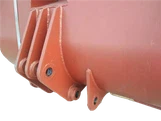
What materials are used to make a 3 - Cubic Meter Bucket?
As a supplier of 3 - cubic meter buckets, I often get asked about the materials used in their construction. The choice of materials is crucial as it directly impacts the bucket's performance, durability, and overall quality. In this blog post, I'll delve into the various materials commonly used to make these large - capacity buckets and explain why they are selected.
Steel
Steel is the most prevalent material for manufacturing 3 - cubic meter buckets. Its widespread use is due to its exceptional strength and durability. High - strength steel alloys, such as AR400 and AR500, are frequently employed. AR400 steel has a hardness that makes it resistant to abrasion, which is vital when the bucket is used for tasks like digging in rocky or gravelly soil. AR500, on the other hand, is even harder and more wear - resistant, suitable for the most demanding applications, such as mining or heavy - duty construction.
The strength of steel allows the bucket to withstand high - impact forces during loading and unloading operations. It can handle the weight of large volumes of materials, including sand, gravel, and even rocks, without deforming. Moreover, steel can be easily welded, which is essential for fabricating the bucket's structure. Welding enables the joining of different parts, such as the side plates, bottom plate, and cutting edge, to form a sturdy and seamless unit.
Another advantage of steel is its availability. It is a widely produced and accessible material, which helps in keeping the production costs of the 3 - cubic meter buckets relatively stable. However, steel is also heavy, which can increase the overall weight of the equipment using the bucket. This might lead to higher fuel consumption and reduced efficiency in some cases.
Hardox Steel
Hardox steel is a specialized type of high - strength steel that is increasingly popular in the manufacturing of heavy - duty buckets. It offers superior wear resistance compared to regular steel. Hardox steel can withstand extreme abrasion, making it ideal for buckets used in harsh environments, such as in the recycling industry where the bucket may come into contact with sharp and abrasive materials like broken glass and metal scraps.
The unique properties of Hardox steel are achieved through a special heat - treatment process. This process gives the steel a fine - grained structure, which enhances its toughness and resistance to cracking. When used in a 3 - cubic meter bucket, Hardox steel can significantly extend the bucket's service life, reducing the frequency of replacements and maintenance costs.
In addition to its wear resistance, Hardox steel is also relatively lightweight compared to some other high - strength steels. This can be beneficial as it helps to reduce the overall weight of the bucket, improving the fuel efficiency of the machinery and increasing its payload capacity.

Wear - Resistant Liners
To further enhance the durability of 3 - cubic meter buckets, wear - resistant liners are often installed. These liners are typically made of materials such as rubber, ceramic, or ultra - high - molecular - weight polyethylene (UHMWPE).
Rubber liners are known for their shock - absorbing properties. They can reduce the impact force on the bucket's structure when it comes into contact with hard materials. Rubber is also resistant to corrosion, which is an advantage in applications where the bucket may be exposed to chemicals or moisture. However, rubber liners may not be as effective in extremely high - abrasion environments.
Ceramic liners offer excellent wear resistance. They are extremely hard and can withstand the most abrasive materials. Ceramic liners are often used in buckets for applications like sandblasting or handling highly abrasive minerals. However, they are brittle and can crack if subjected to high - impact forces.
UHMWPE liners are a popular choice due to their combination of wear resistance and low friction. The low friction property allows materials to slide easily out of the bucket, reducing the sticking and buildup of materials inside the bucket. UHMWPE is also lightweight, which can help to reduce the overall weight of the bucket.

Cutting Edges
The cutting edge of a 3 - cubic meter bucket is a critical component. It is the part that first comes into contact with the material being dug or loaded. High - carbon steel is commonly used for cutting edges. High - carbon steel has high hardness, which enables it to cut through tough materials effectively.
Some cutting edges are also made of carbide - tipped steel. Carbide is an extremely hard material, and when combined with steel, it creates a cutting edge that is both strong and wear - resistant. Carbide - tipped cutting edges can last much longer than regular steel cutting edges, especially in applications where the bucket is used to dig through hard rock or concrete.

Comparison with Other Bucket Sizes
When considering the materials for a 3 - cubic meter bucket, it's interesting to compare them with those used in other bucket sizes. For example, a [3.5 - cubic Meter Bucket](/scraper - accessories/scraper - bucket/3 - 5 - cubic - meter - bucket.html) may require even stronger and more wear - resistant materials due to its larger capacity and potentially heavier loads. On the other hand, a [2 - cubic Meter Bucket](/scraper - accessories/scraper - bucket/2 - cubic - meter - bucket.html) may use similar materials but in slightly different thicknesses or grades, depending on its intended application. A [0.75 - cubic Meter Bucket](/scraper - accessories/scraper - bucket/0 - 75 - cubic - meter - bucket.html) may be more lightweight and could use less heavy - duty materials, especially if it is used for lighter tasks such as landscaping or small - scale construction.
Conclusion
In conclusion, the materials used to make a 3 - cubic meter bucket are carefully selected to meet the demanding requirements of heavy - duty applications. Steel, especially high - strength and specialized steels like Hardox, forms the backbone of the bucket's structure. Wear - resistant liners and high - quality cutting edges are added to enhance its performance and durability.

If you are in the market for a 3 - cubic meter bucket or have any questions about the materials and their suitability for your specific needs, I encourage you to contact me for a detailed discussion. We can explore the best material combinations to ensure that you get a bucket that meets your requirements and offers long - term value.
References
- "Steel for Heavy - Duty Equipment" - Journal of Materials in Construction
- "Wear - Resistant Materials in Mining Applications" - International Mining Magazine
- "Advances in Bucket Manufacturing Technology" - Industrial Equipment Review