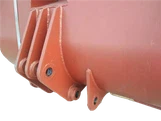
In the realm of heavy - duty construction and mining equipment, the 4 - Cubic Meter Boom stands as a remarkable piece of machinery. As a supplier of these powerful booms, I've had the privilege of witnessing their impact on various projects firsthand. Today, I'd like to delve into the power source of a 4 - Cubic Meter Boom, exploring the technologies and mechanisms that drive its performance.
Hydraulic Power: The Backbone of the 4 - Cubic Meter Boom
The most common and effective power source for a 4 - Cubic Meter Boom is hydraulic power. Hydraulics is a technology that uses pressurized fluid to generate, control, and transmit power. In the case of the 4 - Cubic Meter Boom, hydraulic systems are responsible for its movement, lifting, and digging capabilities.
A hydraulic system in a 4 - Cubic Meter Boom consists of several key components. First, there is the hydraulic pump. This pump is typically driven by an engine, either a diesel engine or an electric motor. The pump's role is to draw in hydraulic fluid, usually oil, from a reservoir and then pressurize it. The pressurized fluid is then sent through a series of hoses and valves to the hydraulic cylinders.
Hydraulic cylinders are the muscle of the boom. These cylinders are essentially tubes with a piston inside. When the pressurized hydraulic fluid enters one side of the cylinder, it pushes the piston, causing the cylinder to extend or retract. This linear motion is then translated into the movement of the boom. For example, when the hydraulic fluid is directed to a cylinder attached to the boom's main arm, it can lift the arm upwards. When the fluid is redirected to the opposite side of the cylinder, the arm lowers.
The valves in the hydraulic system play a crucial role in controlling the flow of the hydraulic fluid. They can direct the fluid to different cylinders at different times, allowing for precise control of the boom's movement. This precision is essential in construction and mining operations, where the boom may need to perform delicate tasks such as placing heavy objects in specific locations or digging with a high degree of accuracy.
Engine Options: Diesel vs. Electric
As mentioned earlier, the hydraulic pump in a 4 - Cubic Meter Boom can be driven by either a diesel engine or an electric motor. Each option has its own advantages and disadvantages.
Diesel engines have long been the traditional choice for heavy - duty equipment like the 4 - Cubic Meter Boom. Diesel engines are known for their high torque, which means they can generate a large amount of power at low speeds. This is ideal for the boom, as it often needs to perform heavy - lifting tasks. Diesel engines are also very reliable and can operate in a wide range of environmental conditions. They can run for long periods without needing to be refueled, making them suitable for remote construction sites where access to electricity may be limited.
On the other hand, electric motors are becoming an increasingly popular option for powering the boom. Electric motors are more environmentally friendly than diesel engines, as they produce zero emissions at the point of use. They are also generally quieter, which can be an advantage in urban construction sites where noise pollution is a concern. Electric motors are more efficient in converting electrical energy into mechanical energy, which can result in lower operating costs over the long term. However, they do require a reliable source of electricity, which may not be available in all locations.
Comparing with Other Boom Sizes
When considering the power source of a 4 - Cubic Meter Boom, it's interesting to compare it with smaller boom sizes, such as the 2 - cubic Meter Rear Operator's Cabin Swing Arm, the 2 - cubic Meter Breaker Front Arm, and the 2 - cubic Meter Double - cylinder Boom.
Smaller booms generally require less power than the 4 - Cubic Meter Boom. Their hydraulic systems can be less complex, and the engines or motors driving the hydraulic pumps can be smaller. For example, a 2 - Cubic Meter Boom may be able to use a smaller diesel engine or a less powerful electric motor, which can result in lower costs both in terms of the initial purchase price and the operating costs.
However, the smaller booms also have limitations in terms of their lifting and digging capabilities. The 4 - Cubic Meter Boom, with its more powerful power source and larger hydraulic system, can handle heavier loads and perform more demanding tasks. This makes it a better choice for large - scale construction and mining projects.


Maintenance and Reliability
The power source of a 4 - Cubic Meter Boom requires regular maintenance to ensure its reliability and performance. For diesel engines, this includes tasks such as changing the oil and filters, checking the fuel system, and inspecting the engine's components for wear and tear. Electric motors also need maintenance, such as checking the electrical connections, lubricating the bearings, and ensuring the cooling system is working properly.
The hydraulic system also needs to be maintained. This involves checking the hydraulic fluid level and quality regularly. Over time, the hydraulic fluid can become contaminated with dirt, debris, and water, which can affect the performance of the system. If the fluid is dirty, it needs to be replaced. The hoses and valves in the hydraulic system also need to be inspected for leaks and damage.
Proper maintenance is essential to prevent breakdowns and ensure the longevity of the boom. A well - maintained power source and hydraulic system can reduce downtime, which is crucial in construction and mining operations where time is money.
The Future of Boom Power Sources
Looking ahead, the future of the power source for 4 - Cubic Meter Booms is likely to see further advancements. There is a growing trend towards more sustainable and efficient power sources. Hybrid systems, which combine diesel engines with electric motors, are already being explored. These hybrid systems can offer the best of both worlds, providing the high torque of a diesel engine when needed and the environmental benefits and efficiency of an electric motor during lighter operations.
Battery - powered electric motors are also a promising option. With the continuous improvement of battery technology, the range and power of battery - powered equipment are increasing. In the future, we may see 4 - Cubic Meter Booms that are powered entirely by batteries, eliminating the need for diesel engines and reducing emissions even further.
Why Choose Our 4 - Cubic Meter Booms
As a supplier of 4 - Cubic Meter Booms, we take pride in offering high - quality products. Our booms are designed with the latest technology in hydraulic systems and engine options. We understand the importance of reliability and performance in construction and mining operations, and we ensure that our booms meet the highest standards.
Our team of experts can provide you with in - depth advice on the power source options for your specific needs. Whether you need a diesel - powered boom for a remote construction site or an electric - powered boom for an environmentally sensitive area, we can help you make the right choice.
We also offer comprehensive maintenance and support services. Our technicians are trained to service and repair the power sources and hydraulic systems of our booms, ensuring that your equipment stays in top condition.
If you're in the market for a 4 - Cubic Meter Boom, we invite you to contact us for a detailed discussion. We can provide you with more information about our products, pricing, and delivery options. Let's work together to find the perfect boom for your project.
References
- "Hydraulic Systems: Design, Installation, and Maintenance" by Peter A. Nachtwey
- "Diesel Engine Technology" by Richard Stone
- "Electric Motors and Drives: Fundamentals, Types, and Applications" by Austin Hughes