What is the mechanical strength of a 3 - Cubic Meter Bucket?
As a supplier of 3 - cubic meter buckets, I often get asked about the mechanical strength of these robust pieces of equipment. Understanding the mechanical strength of a 3 - cubic meter bucket is crucial for anyone involved in industries such as construction, mining, and agriculture, where these buckets are commonly used. In this blog post, I'll delve into the factors that determine the mechanical strength of a 3 - cubic meter bucket, and why it matters in real - world applications.
Factors Affecting Mechanical Strength
Material Selection
The choice of material is the cornerstone of a bucket's mechanical strength. Most 3 - cubic meter buckets are made from high - strength steel alloys. These alloys are specifically engineered to withstand the extreme loads and stresses encountered during normal operation. For example, some buckets use quenched and tempered steel, which has excellent hardness and toughness. This type of steel can resist abrasion from rocks, gravel, and other abrasive materials, while also being able to absorb impact forces without cracking or deforming.
Another important aspect of material selection is the thickness of the steel. Thicker steel generally means greater strength, but it also adds weight to the bucket. A balance must be struck between strength and weight to ensure that the bucket can be efficiently used with the appropriate machinery. Our 3 - cubic meter buckets are carefully designed to use the optimal steel thickness for maximum strength while keeping the weight within acceptable limits.
Design and Geometry
The design and geometry of a 3 - cubic meter bucket play a significant role in its mechanical strength. The shape of the bucket affects how forces are distributed throughout the structure. A well - designed bucket will have a smooth and continuous shape that minimizes stress concentrations. For instance, rounded corners and edges can help to reduce the likelihood of cracks forming under stress.
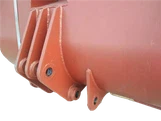
The reinforcement of the bucket is also a key design consideration. Reinforcement bars and plates are strategically placed in areas that are likely to experience high stress, such as the corners, the cutting edge, and the attachment points. These reinforcements add extra strength and stiffness to the bucket, allowing it to handle heavy loads without failure.
Manufacturing Process
The manufacturing process can greatly influence the mechanical strength of a 3 - cubic meter bucket. High - quality welding is essential for joining the different parts of the bucket together. Proper welding techniques ensure that the joints are strong and durable, capable of withstanding the same loads as the rest of the bucket.
Heat treatment is another important manufacturing step. Heat treatment can improve the mechanical properties of the steel, such as hardness and toughness. By carefully controlling the heating and cooling processes, we can ensure that the steel in our buckets has the desired strength and performance characteristics.


Importance of Mechanical Strength in Real - World Applications
In construction, a 3 - cubic meter bucket is often used for tasks such as excavating soil, moving large amounts of debris, and loading materials into trucks. The mechanical strength of the bucket is crucial in these applications because it determines how much weight the bucket can safely carry and how well it can withstand the forces generated during excavation and loading. A bucket with insufficient strength may deform or break under heavy loads, leading to costly downtime and potential safety hazards.
In mining, the demands on a 3 - cubic meter bucket are even more extreme. Mines often deal with hard rocks and abrasive materials, which can quickly wear down a bucket that is not strong enough. A strong bucket can withstand the high - impact forces generated when breaking up large rocks and the continuous abrasion from handling ore and other minerals. This not only increases the productivity of the mining operation but also reduces the frequency of bucket replacements, saving both time and money.
In agriculture, 3 - cubic meter buckets are used for tasks such as moving hay, manure, and soil. While the loads may not be as heavy as in construction or mining, the bucket still needs to be strong enough to handle the repetitive nature of these tasks. A durable bucket can last for many years, providing reliable service on the farm.
Comparing with Smaller Buckets
We also offer 0.75 - cubic Meter Bucket, 1 - cubic Meter Bucket, and 1.5 - cubic Meter Bucket. These smaller buckets have their own advantages in terms of maneuverability and suitability for lighter tasks. However, when it comes to handling large volumes of materials, a 3 - cubic meter bucket is the clear choice.
The mechanical strength requirements for smaller buckets are generally lower than those for a 3 - cubic meter bucket. Smaller buckets are designed to handle lighter loads and may use thinner steel or less reinforcement. But as the volume of the bucket increases, so do the forces acting on it, and the need for greater mechanical strength becomes essential.
How to Evaluate the Mechanical Strength of a 3 - Cubic Meter Bucket
When evaluating the mechanical strength of a 3 - cubic meter bucket, there are several key indicators to look for. First, check the material specifications. High - strength steel alloys with appropriate thickness are a good sign of a strong bucket. Second, examine the design and reinforcement. Look for well - rounded shapes, strategic reinforcement, and high - quality welding.
It's also important to consider the reputation of the manufacturer. A reliable supplier will have a track record of producing high - quality buckets that meet or exceed industry standards. At our company, we conduct rigorous testing on all our 3 - cubic meter buckets to ensure that they meet the highest levels of mechanical strength and performance.
Conclusion
The mechanical strength of a 3 - cubic meter bucket is a complex but essential characteristic. It is determined by factors such as material selection, design and geometry, and the manufacturing process. Understanding the mechanical strength of a 3 - cubic meter bucket is crucial for ensuring its safe and efficient use in various industries.
If you are in the market for a 3 - cubic meter bucket, or any of our other bucket sizes, we invite you to contact us for more information. Our team of experts is ready to assist you in finding the right bucket for your specific needs. Whether you are involved in construction, mining, or agriculture, we have the experience and expertise to provide you with a high - quality, reliable bucket that will meet your requirements.
References
- Callister, W. D., & Rethwisch, D. G. (2010). Materials Science and Engineering: An Introduction. Wiley.
- Shigley, J. E., & Mischke, C. R. (2001). Mechanical Engineering Design. McGraw - Hill.