When it comes to the mining industry, the safety and efficiency of mining trucks are of utmost importance. As a supplier of 20 - Ton Mine Trucks, I often receive inquiries about various technical aspects of these vehicles, and one question that frequently pops up is: "What is the braking distance of a 20 - Ton Mine Truck at full load?" In this blog post, I'll delve into the factors that affect the braking distance and provide a comprehensive analysis.
Factors Affecting Braking Distance
The braking distance of a 20 - Ton Mine Truck at full load is influenced by multiple factors. Understanding these factors is crucial for both mine operators and drivers to ensure safe operations.
Vehicle Weight
The most obvious factor is the weight of the mine truck. A 20 - Ton Mine Truck, when fully loaded, carries a significant amount of weight. According to Newton's second law of motion, F = ma (Force equals mass times acceleration). When the truck is braking, a greater mass requires a larger braking force to achieve the same deceleration. For a 20 - Ton (20,000 kg) fully - loaded truck, the inertia is substantial, and it takes more energy to bring it to a stop compared to a lighter vehicle.
Speed
The speed of the truck is another critical factor. The braking distance is proportional to the square of the speed. This means that if the speed of the mine truck doubles, the braking distance quadruples. For example, if a 20 - Ton Mine Truck traveling at 20 km/h has a certain braking distance, when its speed increases to 40 km/h, the braking distance will be four times longer. In a mining environment, where trucks often need to move quickly to transport materials efficiently, speed control is essential to keep the braking distance within a safe range.
Road Conditions
The condition of the mining road has a significant impact on the braking distance. A dry, well - maintained road provides better traction for the truck's tires, allowing for more effective braking. In contrast, a wet, muddy, or icy road surface reduces the friction coefficient between the tires and the road. This results in a longer braking distance as the tires have less grip to slow down the truck. Additionally, uneven roads with potholes or bumps can cause the truck to bounce, which further affects the braking performance.
Braking System
The quality and performance of the braking system are vital. Modern 20 - Ton Mine Trucks are equipped with advanced braking systems, such as hydraulic or air - operated brakes. These systems are designed to provide reliable and powerful braking force. However, over time, the braking components can wear out. Worn brake pads, leaking brake lines, or malfunctioning brake calipers can all lead to a decrease in braking efficiency and an increase in the braking distance. Regular maintenance and inspection of the braking system are necessary to ensure its proper functioning.
Calculating the Braking Distance
To calculate the approximate braking distance of a 20 - Ton Mine Truck at full load, we can use the following simplified formula based on the laws of physics:
[d=\frac{v^{2}}{2\mu g}]
Where:

- (d) is the braking distance
- (v) is the initial velocity of the truck
- (\mu) is the coefficient of friction between the tires and the road surface
- (g) is the acceleration due to gravity ((g = 9.81m/s^{2}))
Let's assume a 20 - Ton Mine Truck is traveling at a speed of 30 km/h (which is approximately 8.33 m/s) on a dry road with a coefficient of friction (\mu = 0.7).
[d=\frac{(8.33)^{2}}{2\times0.7\times9.81}=\frac{69.4}{13.734}\approx5.06m]
However, this is a very simplified calculation. In a real - world mining scenario, other factors such as the reaction time of the driver, the efficiency of the braking system, and the dynamic behavior of the truck need to be considered. The actual braking distance may be longer than this calculated value.
Importance of Knowing the Braking Distance
Knowing the braking distance of a 20 - Ton Mine Truck at full load is crucial for several reasons.
Safety
Safety is the top priority in the mining industry. By understanding the braking distance, mine operators can set appropriate speed limits on the mining roads. Drivers can also be more aware of the stopping distance required for their trucks, which helps them avoid collisions with other vehicles, equipment, or workers on the mine site.
Operational Efficiency
On the other hand, having a clear understanding of the braking distance can also improve operational efficiency. Mine operators can optimize the layout of the mining roads and the traffic flow to ensure that trucks can stop safely without causing unnecessary delays. For example, they can design longer braking zones at intersections or near loading and unloading areas.
Our 20 - Ton Mine Trucks
As a supplier of 20 - ton Mine Trucks, we are committed to providing high - quality vehicles with excellent braking performance. Our 20 - Ton Mine Trucks are equipped with state - of - the - art braking systems that are designed to meet the demanding requirements of the mining industry.
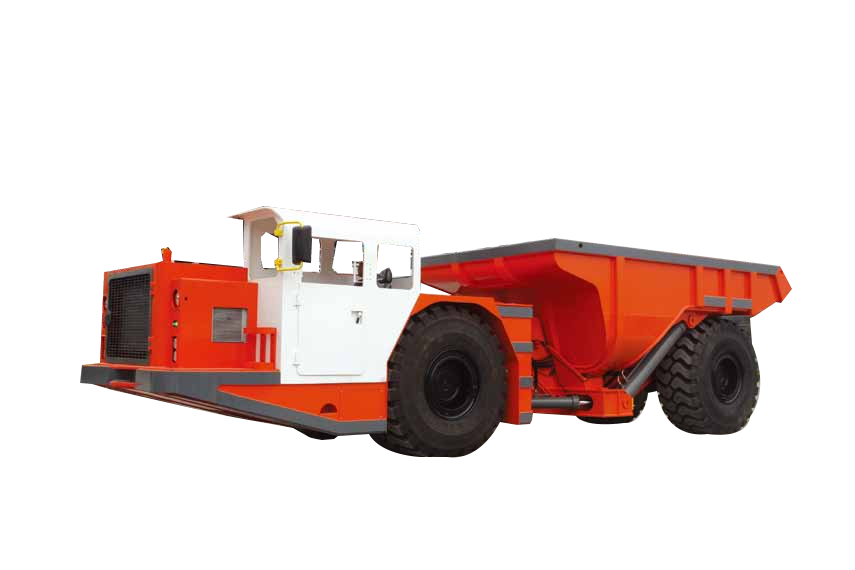
We also offer a 20 Ton Underground Articulated Dump Mining Truck For Underground Mine. This type of truck is specifically designed for underground mining operations, where space is limited, and safety is even more critical. The braking system of our underground trucks is engineered to provide reliable stopping power in challenging underground conditions.
In addition to our 20 - Ton Mine Trucks, we also have 30 - ton Mine Trucks available for customers with different needs. These larger trucks offer higher payload capacity while still maintaining excellent braking performance.
Contact Us for Purchase and Consultation
If you are in the market for a 20 - Ton Mine Truck or any other mining equipment, we invite you to contact us for more information. Our team of experts can provide detailed technical specifications, pricing, and after - sales service information. We understand the unique requirements of the mining industry and are dedicated to helping you find the most suitable mining trucks for your operations. Whether you need a single truck or a fleet of vehicles, we are here to assist you in making the right choice.
References
- Halliday, D., Resnick, R., & Walker, J. (2014). Fundamentals of Physics. Wiley.
- Gillespie, T. D. (1992). Fundamentals of Vehicle Dynamics. Society of Automotive Engineers.