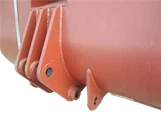
Electrostatic discharge (ESD) in a mining truck hopper can pose significant risks, including potential ignition of flammable materials, damage to electronic components, and safety hazards to operators. As a leading supplier of Mining Truck Hopper, we understand the importance of implementing effective measures to prevent ESD. In this blog post, we will explore various strategies and technologies that can be employed to safeguard mining truck hoppers from electrostatic discharge.
Understanding Electrostatic Discharge in Mining Truck Hoppers
Before delving into prevention measures, it is essential to understand how electrostatic discharge occurs in mining truck hoppers. Electrostatic charges can build up due to several factors, such as friction between the hopper and the mined materials, the movement of particles within the hopper, and the interaction between different materials. When these charges accumulate to a critical level, they can discharge suddenly, leading to sparks or arcs.
Grounding Systems
One of the most fundamental and effective measures for preventing ESD is the implementation of proper grounding systems. Grounding provides a path for the electrostatic charges to flow safely to the ground, preventing the build - up of excessive voltage.
- Direct Grounding of the Hopper: The mining truck hopper should be directly connected to the truck's frame, which is in turn grounded to the earth through the tires and the ground contact. This connection should be made using low - resistance conductors, such as copper cables. Regular inspections should be carried out to ensure that the grounding connections are intact and free from corrosion.
- Grounding of Loaded Materials: In addition to grounding the hopper, the materials being loaded into the hopper can also be grounded. For example, if the mined materials are transferred from a conveyor belt, the conveyor can be grounded, and the transfer point can be designed to minimize static charge generation.
Anti - Static Coatings
Anti - static coatings can be applied to the interior surface of the mining truck hopper to reduce the build - up of electrostatic charges. These coatings work by either dissipating the charges or preventing their generation in the first place.
- Conductive Coatings: Conductive coatings contain materials such as carbon or metallic particles that allow the electrostatic charges to spread evenly across the surface of the hopper and then be conducted to the ground. These coatings are particularly effective in environments where the hopper is exposed to high levels of dust or particulate matter.
- Anti - Static Polymer Coatings: Polymer - based anti - static coatings can also be used. These coatings have a low surface resistivity, which helps to prevent the accumulation of static charges. They are often more durable and resistant to wear and tear compared to conductive coatings.
Humidity Control
Maintaining an appropriate level of humidity in the mining environment can also help to prevent electrostatic discharge. Higher humidity levels increase the conductivity of the air, allowing the electrostatic charges to dissipate more easily.
- Humidification Systems: In enclosed mining areas or during dry weather conditions, humidification systems can be installed to increase the relative humidity. This can be achieved through the use of misting systems or steam generators. However, it is important to ensure that the humidity levels do not cause other problems, such as corrosion of the hopper or damage to the mined materials.
- Monitoring and Adjustment: Regular monitoring of the humidity levels is necessary to ensure that they remain within the optimal range. Automation systems can be used to adjust the humidification equipment based on the measured humidity.
Ionization
Ionization is a process that neutralizes electrostatic charges by introducing ions into the air. This can be an effective way to prevent the build - up of static charges in the mining truck hopper.
- Ionizing Bars: Ionizing bars can be installed inside the hopper or in the vicinity of the loading and unloading areas. These bars generate a stream of positive and negative ions, which attach to the charged particles in the air and on the surface of the hopper, neutralizing the electrostatic charges.
- Portable Ionizers: Portable ionizers can also be used for spot treatment, especially during maintenance or cleaning operations. They are easy to move around and can be used to quickly neutralize static charges in specific areas.
Design Considerations
The design of the mining truck hopper can also play a crucial role in preventing electrostatic discharge.
- Smooth Surfaces: The interior surface of the hopper should be as smooth as possible to reduce friction between the hopper and the mined materials. This helps to minimize the generation of static charges during the loading and unloading processes.
- Rounded Corners: Sharp corners and edges can cause the concentration of electrostatic charges. By designing the hopper with rounded corners, the charge distribution can be made more uniform, reducing the risk of ESD.
- Integration with Other Components: The hopper should be designed to work in harmony with other components of the mining truck, such as the Mining Truck Rotating Hinge Frame and the Mine Truck Rear Frame. Proper insulation and grounding of these components can also contribute to the overall prevention of electrostatic discharge.
Operator Training
Operators play a vital role in preventing electrostatic discharge in mining truck hoppers. They should be trained on the importance of ESD prevention and the proper procedures to follow.
- Loading and Unloading Procedures: Operators should be trained to load and unload the mined materials in a way that minimizes the generation of static charges. For example, they should avoid sudden movements or impacts that can cause friction and charge build - up.
- Maintenance and Inspection: Operators should be trained to perform regular maintenance and inspections of the hopper and its grounding systems. They should be able to identify signs of wear, damage, or corrosion in the anti - static coatings, grounding connections, and other ESD prevention components.
Conclusion
Preventing electrostatic discharge in a mining truck hopper is a multi - faceted challenge that requires a combination of technical solutions, design considerations, and operator training. As a supplier of high - quality Mining Truck Hopper, we are committed to providing our customers with products and solutions that meet the highest standards of safety and performance.
If you are interested in learning more about our mining truck hoppers and the ESD prevention measures we offer, or if you have any specific requirements for your mining operations, we encourage you to contact us for a detailed discussion. Our team of experts is ready to assist you in finding the best solutions for your needs.


References
- "Electrostatic Discharge Handbook" - Published by the Institute of Electrical and Electronics Engineers (IEEE)
- "Mining Equipment Design and Safety Standards" - Compiled by the International Council on Mining and Metals (ICMM)
- "Static Electricity in Industrial Processes" - A technical report by the Health and Safety Executive (HSE) in the UK