As a supplier of Fixed Crusher Booms, I am often asked about the main components that make up these essential pieces of equipment. Fixed Crusher Booms are crucial in various industrial applications, especially in mining, quarrying, and construction, where they are used to break down large rocks and materials into smaller, more manageable sizes. In this blog post, I will delve into the key components of a Fixed Crusher Boom, explaining their functions and importance.
1. Boom Structure
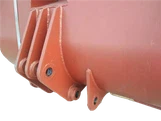
The boom structure is the backbone of the Fixed Crusher Boom. It is typically made of high - strength steel to withstand the heavy loads and stresses during operation. The boom is designed to provide a stable platform for the other components and to reach the desired working area. It comes in different lengths and configurations depending on the specific application requirements.
A well - designed boom structure should have excellent rigidity and durability. It needs to be able to support the weight of the crusher attachment, as well as any forces generated during the crushing process. For example, in large - scale mining operations, longer booms may be required to reach deeper into the quarry or mine, while in more confined construction sites, shorter and more maneuverable booms are preferred.
2. Crusher Attachment
The crusher attachment is the heart of the Fixed Crusher Boom. It is responsible for the actual crushing of the materials. There are different types of crusher attachments available, such as jaw crushers, impact crushers, and cone crushers.
Jaw crushers are commonly used for primary crushing. They work by compressing the material between two jaws, one fixed and one moving. This type of crusher is ideal for breaking large, hard rocks. Impact crushers, on the other hand, use the principle of impact to break the material. They are suitable for crushing softer materials and can produce a more cubical - shaped product. Cone crushers are often used for secondary and tertiary crushing, providing a finer and more consistent particle size.

When choosing a crusher attachment, factors such as the type of material to be crushed, the desired output size, and the production capacity need to be considered. For instance, if you are dealing with very hard granite, a jaw crusher might be the best choice, while for limestone, an impact crusher could be more efficient.
3. Hydraulic System
The hydraulic system is a critical component of the Fixed Crusher Boom. It is responsible for powering the movement of the boom and the operation of the crusher attachment. The hydraulic system consists of a hydraulic pump, cylinders, valves, and hoses.
The hydraulic pump generates the pressure needed to operate the cylinders. The cylinders are used to control the movement of the boom, such as lifting, lowering, and swinging. Valves are used to regulate the flow and pressure of the hydraulic fluid, ensuring smooth and precise operation. Hoses are used to transport the hydraulic fluid between the different components.
A reliable hydraulic system is essential for the efficient and safe operation of the Fixed Crusher Boom. It should be able to provide sufficient power to handle the heavy loads and repetitive movements. Regular maintenance of the hydraulic system, including checking the fluid level, filter replacement, and inspection of hoses and valves, is necessary to prevent breakdowns and ensure long - term performance.
4. Control System
The control system allows the operator to control the movement of the boom and the operation of the crusher attachment. It can be either manual or automated, depending on the complexity of the application and the requirements of the user.
In a manual control system, the operator uses levers or joysticks to control the movement of the boom and the activation of the crusher. This type of system is simple and easy to operate, but it requires a skilled operator to ensure accurate and efficient operation. Automated control systems, on the other hand, use sensors and programmable logic controllers (PLCs) to control the boom and the crusher. They can provide more precise control, improve productivity, and reduce the risk of human error.
For example, in an automated system, the boom can be programmed to follow a specific path, and the crusher can be adjusted based on the material properties and the desired output size. This not only increases the efficiency of the operation but also improves the safety of the workers.
5. Mounting System
The mounting system is used to attach the Fixed Crusher Boom to a base, such as a vehicle or a stationary structure. It needs to be strong and stable to ensure that the boom can operate safely and effectively.
There are different types of mounting systems available, depending on the application. For mobile applications, the boom is usually mounted on a crawler or wheeled vehicle. The mounting system for a mobile application needs to be designed to withstand the vibrations and movements of the vehicle. For stationary applications, the boom can be mounted on a concrete foundation or a steel structure.
A proper mounting system is crucial for the overall performance of the Fixed Crusher Boom. It should be able to transfer the loads from the boom to the base without causing any excessive stress or deformation.
6. Safety Features
Safety is of utmost importance in any industrial equipment, and Fixed Crusher Booms are no exception. There are several safety features that are typically incorporated into these booms.
Emergency stop buttons are provided to immediately stop the operation of the boom and the crusher in case of an emergency. Guards are installed around the moving parts to prevent workers from getting injured. Overload protection systems are also used to prevent damage to the equipment in case of excessive loads.

In addition, some Fixed Crusher Booms are equipped with sensors that can detect abnormal conditions, such as high temperatures or low hydraulic pressure, and alert the operator. These safety features not only protect the workers but also help to prevent costly damage to the equipment.
Product Examples
At our company, we offer a wide range of Fixed Crusher Booms with different specifications. For example, our 1 - cubic Meter Crusher Front Boom is a compact and efficient option suitable for small - to - medium - scale operations. It is designed with a high - strength boom structure and a powerful crusher attachment, providing reliable performance.
Our 2 - cubic Meter Breaker Front Arm is ideal for more heavy - duty applications. It features a robust hydraulic system and a precision control system, allowing for accurate and efficient operation.
Another popular product is our 2 - cubic Meter Double - cylinder Boom. This boom is equipped with a double - cylinder hydraulic system, providing enhanced lifting and crushing capabilities.

Conclusion
In conclusion, a Fixed Crusher Boom is a complex piece of equipment composed of several key components, each playing a vital role in its operation. The boom structure provides the foundation, the crusher attachment performs the crushing task, the hydraulic system powers the movement, the control system enables operator control, the mounting system ensures stability, and the safety features protect the workers and the equipment.

If you are in the market for a Fixed Crusher Boom, we invite you to contact us for more information and to discuss your specific requirements. Our team of experts is ready to assist you in choosing the right product for your application and to provide you with the best possible service. Whether you are involved in mining, quarrying, or construction, we have the solution to meet your needs.
References
- Construction Equipment Handbook. McGraw - Hill.
- Mining Engineering Principles. Society for Mining, Metallurgy & Exploration.
- Hydraulic Systems Design and Maintenance Guide. Parker Hannifin Corporation.