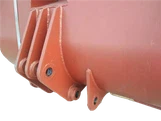
As a supplier of scraper buckets, I've witnessed firsthand the pivotal role these tools play in various industries, from mining and construction to agriculture. Scraper buckets are indispensable for tasks such as material handling, earthmoving, and excavation. However, like any piece of heavy - duty equipment, they are prone to several common problems. Understanding these issues is crucial for both suppliers like me and end - users to ensure efficient operation and longevity of the scraper buckets.
Wear and Tear
One of the most prevalent problems with scraper buckets is wear and tear. These buckets are constantly in contact with abrasive materials such as rocks, gravel, and soil. Over time, this continuous friction can cause significant damage to the bucket's edges and surfaces. The cutting edge, which is the part of the bucket that first comes into contact with the material being scraped, is particularly vulnerable. As it wears down, the bucket becomes less effective at cutting through and scooping up materials.
For instance, in mining operations where the buckets are used to handle hard rocks on a daily basis, the wear rate can be extremely high. When the cutting edge loses its sharpness, the operator may need to apply more force to the equipment, which not only reduces the efficiency of the scraping process but also puts additional stress on the machinery. To mitigate this problem, high - quality and wear - resistant materials are essential. At our company, we offer products like the Large Scraper Rock Bucket For Industrial Usage With Wear - Resistant Design (Custom Specifications Support). This bucket is designed with wear - resistant materials that can withstand the harsh conditions of industrial use, significantly extending the bucket's lifespan.
Structural Damage
Another common issue is structural damage. Scraper buckets are often subjected to heavy loads and sudden impacts. For example, when a bucket is used to break up large chunks of material or to dig into compacted soil, it can experience significant stress on its structural components. This stress can lead to cracks, bends, and even fractures in the bucket's body.
In underground mining operations, where space is limited and the buckets have to navigate through narrow passages, the risk of impact damage is even higher. A single collision with the tunnel walls or other equipment can cause severe structural problems. If left unaddressed, structural damage can compromise the integrity of the bucket and may lead to catastrophic failure during operation. To prevent this, we recommend regular inspections of the scraper buckets. Our 7 Cubic Meters Scooptram Bucket High Quality Underground Mining Machinery Parts is built with a robust structure that can better withstand impacts and heavy loads, reducing the likelihood of structural damage.
Material Build - Up
Material build - up is also a frequent problem. As the scraper bucket scoops up materials, some of the substances can stick to the inner walls of the bucket. This is especially common when dealing with wet or sticky materials such as clay or mud. Over time, the build - up can accumulate and reduce the bucket's effective capacity.
A bucket that is partially filled with stuck - on material is less efficient at transporting the intended load. It may also cause an imbalance in the bucket, which can affect the stability of the equipment during operation. To address this issue, some scraper buckets are designed with smooth interior surfaces to minimize material adhesion. Additionally, operators can use techniques such as shaking the bucket or using water jets to remove the build - up. Our High Quality Mining Scraper Parts 6 Cubic Bucket is engineered to have a surface finish that helps prevent excessive material build - up, ensuring consistent performance.
Hydraulic System Issues
In modern scraper buckets, hydraulic systems are often used to control the movement of the bucket, such as lifting, lowering, and tilting. These hydraulic systems can encounter a variety of problems. Leaks are a common issue, which can be caused by worn - out seals, damaged hoses, or loose fittings. A hydraulic leak not only reduces the efficiency of the system but can also be a safety hazard, as hydraulic fluid is flammable and can cause slips and falls.
Another problem is a loss of hydraulic pressure. This can be due to a malfunctioning pump, clogged filters, or air in the hydraulic lines. When the hydraulic pressure is insufficient, the bucket may not operate smoothly or may not be able to perform its intended functions. Regular maintenance of the hydraulic system, including checking for leaks, replacing filters, and bleeding the air from the lines, is essential to prevent these problems.
Misalignment
Misalignment of the scraper bucket can also cause problems. If the bucket is not properly aligned with the equipment's mounting points or the material being scraped, it can lead to uneven wear and reduced performance. Misalignment can occur during installation or as a result of normal wear and tear on the equipment.
An improperly aligned bucket may not be able to cut through the material evenly, which can cause the cutting edge to wear out more quickly on one side. It can also put additional stress on the hydraulic system and other components of the equipment. To ensure proper alignment, it is important to follow the manufacturer's installation instructions carefully. Regular inspections can also help detect and correct any misalignment issues before they cause significant damage.
Corrosion
Corrosion is a problem, especially in environments where the scraper buckets are exposed to moisture, chemicals, or saltwater. For example, in coastal construction projects or in some chemical processing plants, the buckets can be at risk of corrosion. Corrosion weakens the metal structure of the bucket, making it more prone to structural damage and reducing its overall lifespan.
To prevent corrosion, the buckets can be coated with anti - corrosion paints or other protective coatings. At our company, we offer scraper buckets with advanced anti - corrosion treatments to ensure they can withstand harsh environmental conditions.


In conclusion, while scraper buckets are essential tools in many industries, they face several common problems. By understanding these issues and taking appropriate preventive measures, such as using high - quality products, regular maintenance, and proper installation, the efficiency and lifespan of the scraper buckets can be significantly improved.
If you are facing any of these problems with your scraper buckets or are looking for high - quality replacement parts, we are here to help. Our team of experts can provide you with professional advice and top - notch products to meet your specific needs. Contact us to start a procurement discussion and find the best scraper bucket solutions for your operations.
References
- "Handbook of Heavy - Duty Equipment Maintenance", Industrial Equipment Publishing, 2020
- "Mining Equipment: Design and Operation", Mining Technology Press, 2019