Hey there! As a scraper bucket supplier, I've seen my fair share of issues with these pieces of equipment. Scrapers are rugged and reliable, but like any heavy - duty machinery, they can run into problems from time to time. Today, I'm gonna walk you through how to troubleshoot a scraper bucket.
1. Visual Inspection
First things first, a good ol' visual check can go a long way. It's often the quickest and easiest way to spot obvious problems.
Check for Physical Damage
Take a good look at the bucket itself. Look for any signs of cracks, dents, or excessive wear. Cracks can weaken the structure of the bucket and might lead to further damage or even failure during operation. If you see a crack, it's not something to ignore. Depending on its location and size, you might be able to weld it up, but in some cases, you may need to replace the damaged part.
Dents can also cause issues. They might affect the bucket's ability to scoop or discharge material evenly. For small dents, you might be able to use a hammer and some basic tools to reshape the metal. But for large - scale dents, it could be a sign of a more serious impact, and you'll need to assess if the entire bucket needs replacement.


Excessive wear is another common problem. Areas like the cutting edge and the side plates are particularly prone to wearing out. If the cutting edge is too worn, the bucket won't be as efficient at digging and scooping. You can check out our 1 - cubic Meter Side Support Frame which is designed to provide extra support and durability to help reduce wear on these critical areas.
Inspect the Hydraulic System
The hydraulic system is crucial for the operation of the scraper bucket. Check the hydraulic hoses for any signs of leaks, cuts, or bulges. A leaking hose can lead to a loss of hydraulic pressure, which will affect the bucket's lifting and dumping functions. If you find a leak, you can usually replace the damaged hose. Make sure to use the correct type of hose and follow the proper installation procedures.
Also, take a look at the hydraulic cylinders. Check for any signs of damage, such as bent rods or leaking seals. A damaged cylinder can cause the bucket to operate unevenly or not at all. In most cases, you'll need to repair or replace the damaged cylinder.
Check the Mounting and Attachment Points
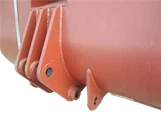
Make sure all the bolts and pins that hold the bucket to the scraper are tight. Loose mounting points can cause the bucket to wobble or move during operation, which is not only dangerous but can also lead to further damage. Check for any signs of corrosion or wear on the attachment points as well. If the bolts or pins are corroded, you may need to replace them to ensure a secure connection.
2. Operational Checks
Once you've done the visual inspection, it's time to do some operational checks to see how the bucket performs.
Test the Lifting and Dumping Functions
Start the scraper and operate the bucket through its full range of motion. Make sure it can lift and dump materials smoothly. If you notice any hesitations, jerks, or abnormal noises, it could indicate a problem. For example, if the bucket is slow to lift, it might be due to low hydraulic pressure or a problem with the hydraulic pump. If there are strange noises, it could be a sign of a mechanical issue, such as a worn - out bearing or a misaligned component.
Evaluate the Scooping Ability
Try scooping up some material and see how well the bucket performs. If the bucket has trouble picking up material, it could be because the cutting edge is dull or worn. You might also want to check the angle of the bucket. If it's not set at the correct angle, it won't be as effective at scooping.
3. Deeper Diagnostic Checks
If the visual and operational checks haven't pinpointed the problem, you may need to do some deeper diagnostic checks.
Check the Hydraulic Pressure
Using a hydraulic pressure gauge, you can measure the pressure in the hydraulic system. Compare the readings to the manufacturer's specifications. If the pressure is too low, it could be due to a leak, a faulty pump, or a clogged filter. If the pressure is too high, it could damage the hydraulic components.
Inspect the Electrical System (if applicable)
Some modern scraper buckets have electrical components, such as sensors or control systems. Check for any loose connections, blown fuses, or damaged wiring. A faulty electrical component can cause erratic behavior in the bucket's operation.
4. When All Else Fails
Sometimes, despite your best efforts, you might not be able to figure out the problem on your own. That's when it's time to call in the experts. As a scraper bucket supplier, we have a team of experienced technicians who can help diagnose and fix even the most complex problems.
We also offer a wide range of scraper bucket products to meet all your needs. For example, our Large Scraper Rock Bucket For Industrial Usage With Wear - Resistant Design (Custom Specifications Support) is perfect for heavy - duty industrial applications. And if you need a specific capacity, our 1 - cubic Meter Side Dump Bucket might be just what you're looking for.
If you're having trouble with your scraper bucket or are interested in our products, don't hesitate to get in touch. We're here to help you keep your equipment running smoothly and efficiently. Whether you need a replacement part, a new bucket, or just some advice on troubleshooting, we're your one - stop - shop for all things scraper bucket. Reach out to us for more information and start a procurement discussion.
References
- Manufacturer's manuals for scraper buckets.
- Industry best practices for heavy - duty equipment maintenance and troubleshooting.
- Technical guides and articles on hydraulic and mechanical systems in construction equipment.