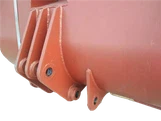
Can a scraper bucket be used in saltwater environments? Well, that's a question I get asked a lot as a scraper bucket supplier. I mean, saltwater is a tough customer, right? It's corrosive, it's full of minerals, and it can really take a toll on equipment. So, let's dig into this and see if our scraper buckets can handle the saltwater challenge.
First off, let's talk about what a scraper bucket is and what it's used for. A scraper bucket is a heavy - duty piece of equipment typically attached to a scraper machine. It's used for tasks like digging, moving, and leveling large amounts of material. We offer different sizes of scraper buckets, like the [1.5 - cubic Meter Bucket](/scraper - accessories/scraper - bucket/1 - 5 - cubic - meter - bucket.html), the [2.3 - cubic Meter Bucket](/scraper - accessories/scraper - bucket/2 - 3 - cubic - meter - bucket.html), and the [4 - cubic Meter Bucket](/scraper - accessories/scraper - bucket/4 - cubic - meter - bucket.html). These buckets are built to be strong and durable, but saltwater is a whole different ballgame.
Saltwater is corrosive because it contains dissolved salts, mainly sodium chloride. When metal is exposed to saltwater, a chemical reaction called corrosion occurs. This reaction eats away at the metal over time, weakening it and potentially causing structural damage. So, if we're thinking about using a scraper bucket in a saltwater environment, we need to consider how the bucket's materials will hold up against corrosion.
Most of our scraper buckets are made from high - quality steel. Steel is a strong and reliable material, but it's also susceptible to corrosion in saltwater. However, there are ways to protect the steel. One common method is to use a protective coating. We can apply special paint or galvanization to the surface of the bucket. Galvanization involves coating the steel with a layer of zinc. Zinc is more reactive than steel, so when it's exposed to saltwater, the zinc corrodes first, sacrificing itself to protect the underlying steel.
Another factor to consider is the design of the scraper bucket. In a saltwater environment, we need to make sure that there are no areas where saltwater can collect and sit for long periods. Standing water can accelerate the corrosion process. That's why we design our buckets with proper drainage holes and smooth surfaces to prevent water from pooling.


Let's talk about some real - world scenarios. Say you're working on a coastal construction project where you need to move sand and sediment that has been saturated with saltwater. In this case, a scraper bucket can definitely be used, but you have to take the right precautions. You'll want to inspect the bucket regularly for signs of corrosion. Look for rust spots, flaking paint, or any other signs that the protective coating is failing.
If you notice any corrosion, it's important to address it right away. You can clean the affected area and re - apply the protective coating if necessary. Also, make sure to rinse the bucket thoroughly with fresh water after each use in a saltwater environment. This will help remove the salt and other corrosive elements from the surface of the bucket.
Now, let's think about the long - term performance of a scraper bucket in saltwater. Over time, even with the best protective measures, the bucket will still experience some wear and tear. The frequency of replacement or major repairs will depend on how often the bucket is used in saltwater, the concentration of salt in the water, and how well the maintenance is carried out.
In some cases, you might need to replace the protective coating more frequently than in a non - saltwater environment. And if the corrosion has caused significant damage to the structural integrity of the bucket, it might be time to get a new one. But don't worry, we've got you covered with our wide range of high - quality scraper buckets.
So, to answer the question, yes, a scraper bucket can be used in saltwater environments, but it requires some extra care and attention. With the right protective coatings, proper design, and regular maintenance, our scraper buckets can perform well in saltwater for a long time.
If you're in the market for a scraper bucket and you're dealing with a saltwater environment, we're here to help. We can provide you with all the information you need about the best materials, coatings, and maintenance practices for your specific situation. Whether you need a [1.5 - cubic Meter Bucket](/scraper - accessories/scraper - bucket/1 - 5 - cubic - meter - bucket.html), a [2.3 - cubic Meter Bucket](/scraper - accessories/scraper - bucket/2 - 3 - cubic - meter - bucket.html), or a [4 - cubic Meter Bucket](/scraper - accessories/scraper - bucket/4 - cubic - meter - bucket.html), we've got the perfect solution for you.
Don't hesitate to reach out if you have any questions or if you're ready to start a conversation about your scraper bucket needs. We're always happy to chat and find the best fit for your project.
References:
- Corrosion Science: An Introduction, Various Authors
- Handbook of Corrosion Engineering, Pierre R. Roberge