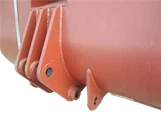
As a supplier of scraper buckets, I've had extensive experience with these essential pieces of equipment in various industries, from construction to mining. While scraper buckets are known for their efficiency and versatility, it's important to acknowledge that they also come with certain disadvantages. Understanding these drawbacks can help potential buyers make more informed decisions when it comes to purchasing and using scraper buckets.
1. Limited Adaptability to Different Materials
One of the primary disadvantages of scraper buckets is their limited adaptability to different types of materials. Scraper buckets are typically designed for specific applications and materials. For instance, a bucket designed for soft soil may not perform well when dealing with hard rock or abrasive materials. When used on materials they are not designed for, the wear and tear on the bucket can be significantly accelerated.
The cutting edge of the scraper bucket, which is crucial for digging and scooping, can quickly become dull when scraping against hard or abrasive substances. This not only reduces the efficiency of the bucket but also increases the frequency of maintenance and replacement. For example, if a 1.5 - cubic Meter Bucket designed for loose sand is used to scrape gravel, the teeth and the base of the bucket may wear out much faster than expected.
2. High Initial and Maintenance Costs
Scraper buckets, especially those of high quality and large capacity, come with a relatively high initial cost. The price of a High Quality Mining Scraper Parts 6 Cubic Bucket can be substantial, which may pose a financial challenge for small - scale contractors or businesses with limited budgets.
In addition to the initial purchase cost, the maintenance cost of scraper buckets is also a significant factor. Regular maintenance is required to ensure the proper functioning of the bucket. This includes checking and replacing worn - out parts such as the cutting edge, teeth, and hydraulic components. The cost of spare parts can add up over time, especially if the bucket is used intensively. Moreover, the labor cost for maintenance and repair also contributes to the overall expense.
3. Size and Maneuverability Issues
Scraper buckets, especially larger ones, can be quite bulky and heavy. This can lead to challenges in terms of maneuverability, both on the job site and during transportation. On a job site with limited space, such as a narrow urban construction area, a large - sized scraper bucket may be difficult to operate effectively. It may not be able to reach certain areas or may cause damage to surrounding structures due to its large size.
During transportation, the size and weight of the scraper bucket can also be a problem. Specialized transportation equipment may be required to move the bucket safely from one location to another. This not only adds to the transportation cost but also requires careful planning to ensure compliance with transportation regulations. For example, a 1 - cubic Meter Side Dump Bucket may need to be transported on a flatbed truck with proper securing mechanisms to prevent damage during transit.
4. Dependence on Compatible Equipment
Scraper buckets need to be used in conjunction with compatible equipment, such as loaders or excavators. If the bucket is not properly matched with the equipment, it can lead to a variety of problems. For example, if the hydraulic system of the loader is not powerful enough to operate a large - capacity scraper bucket, the bucket may not function at its optimal level. This can result in reduced productivity and increased fuel consumption.
Moreover, the compatibility issue also extends to the attachment mechanism. Different models of loaders and excavators may have different attachment interfaces, and a scraper bucket may not fit all of them. This means that users may need to invest in additional adapters or modify their existing equipment to use the bucket, which adds to the overall cost and complexity.
5. Environmental Impact
The operation of scraper buckets can have a certain environmental impact. When used in mining or construction activities, the scraping process can generate a significant amount of dust. This dust can be harmful to the health of workers on the job site and can also have a negative impact on the surrounding environment. In addition, the fuel consumption of the equipment used to operate the scraper bucket contributes to air pollution.
The manufacturing process of scraper buckets also has an environmental footprint. The extraction of raw materials, such as steel, and the energy - intensive manufacturing processes can consume a large amount of resources and produce greenhouse gas emissions.
Mitigating the Disadvantages
While there are several disadvantages associated with scraper buckets, there are also ways to mitigate these issues. For the problem of limited adaptability, users can choose multi - purpose scraper buckets that are designed to handle a wider range of materials. Some buckets come with replaceable cutting edges and teeth, which can be changed according to the specific material being scraped.
To reduce the high initial and maintenance costs, businesses can consider leasing scraper buckets instead of purchasing them outright. This can help to spread the cost over time and reduce the financial burden. Additionally, proper maintenance and regular inspections can extend the lifespan of the bucket and reduce the frequency of part replacements.
For size and maneuverability issues, smaller - sized scraper buckets can be used in areas with limited space. Some manufacturers also offer more compact and lightweight bucket designs without sacrificing too much capacity.
To address the compatibility problem, it is crucial to consult with the bucket supplier and the equipment manufacturer to ensure a proper match. They can provide professional advice on the best combination of equipment and buckets.
In terms of environmental impact, dust suppression systems can be installed on the job site to reduce dust emissions. Additionally, the use of more fuel - efficient equipment and the adoption of sustainable manufacturing practices by the bucket suppliers can help to minimize the environmental footprint.
Conclusion
In conclusion, while scraper buckets are an important tool in many industries, they do come with several disadvantages. These include limited adaptability to different materials, high initial and maintenance costs, size and maneuverability issues, dependence on compatible equipment, and environmental impact. However, by being aware of these drawbacks and taking appropriate measures to mitigate them, users can still make the most of scraper buckets and achieve efficient and cost - effective operations.


If you are considering purchasing a scraper bucket for your business, it is important to carefully evaluate these disadvantages and weigh them against the benefits. Our company has a wide range of scraper buckets to meet different needs. We are committed to providing high - quality products and professional services. If you have any questions or are interested in our products, please feel free to contact us for further discussion and procurement negotiation.
References
- Construction Equipment Handbook, various editions
- Mining Engineering Journal, articles on equipment performance and environmental impact
- Manufacturer's brochures and technical specifications for scraper buckets and related equipment